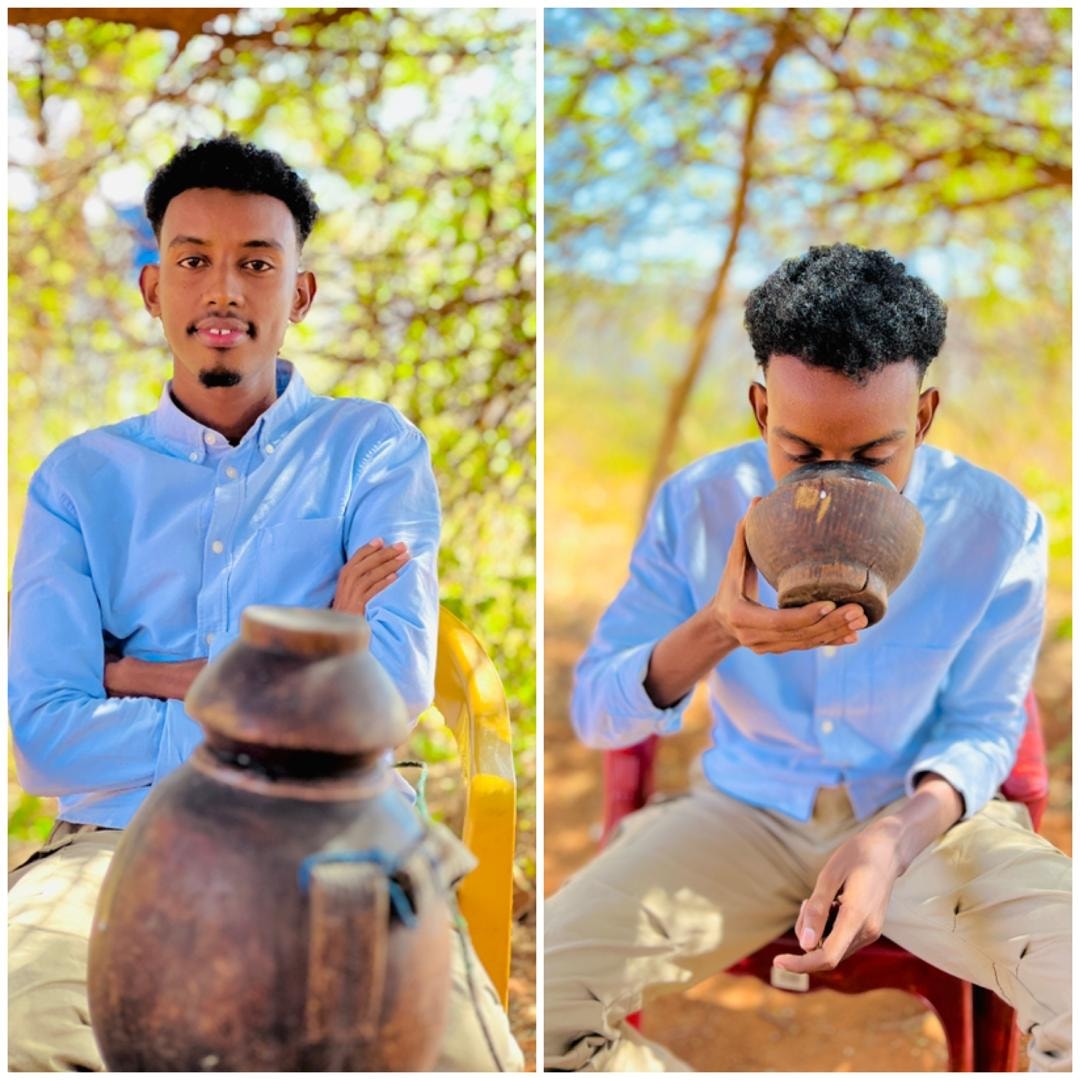
Photographer and blogger at IOM Somali Mission, focused on visual storytelling, communication, and content that informs, inspires, and connects people.
I am a photographer and blogger with a passion for visual storytelling and communication. I currently work as a Communications Assistant at IOM Somali Mission, where I support impactful storytelling and content creation.
Through my work, I focus on capturing meaningful moments and sharing stories that inform, inspire, and connect people.
Latest Blogs
Reflections on photography, communication, and meaningful stories from the field.
Although I have travelled to many Somali cities in the last year I had never been to Jowhar, the capital city of Middle Shabelle region. Jowhar is also the capi...
Yusuf Banani
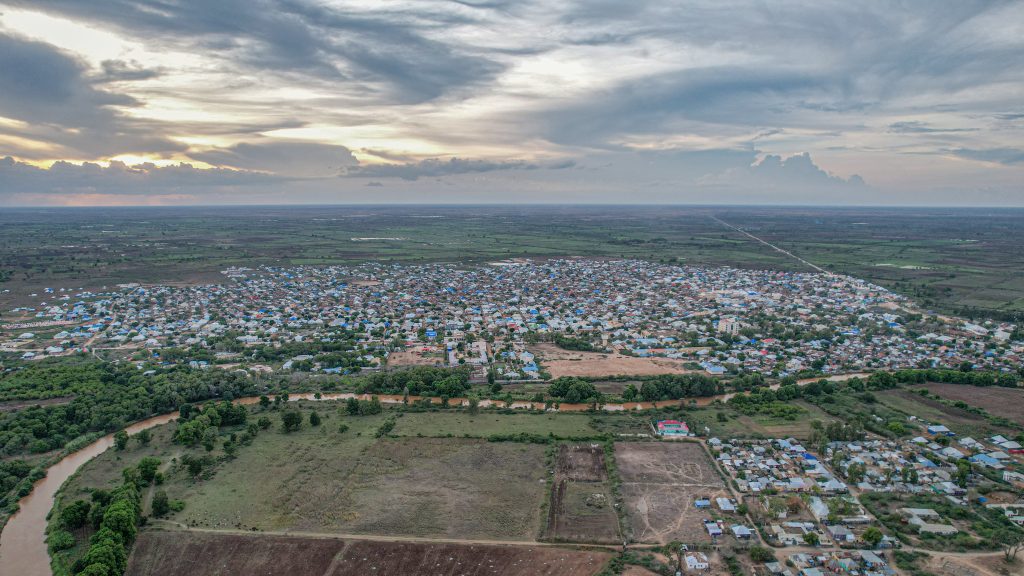
Although I have travelled to many Somali cities in the last year I had never been to Jowhar, the capital city of Middle Shabelle region. Jowhar is also the capital city of Hirshabelle state of Somalia. I was excited that I was finally traveling to this historic town.
We landed on the nearby airfield, about 15 kilometers away from the city, which is protected by the Burundian contingent of AUSSOM (African Union Support and Stabilization Mission in Somalia) and the Somali Danab special forces, supported by the United States. A compound near the airfield hosts several UN agencies. The ‘airport’ was named after Mohamed Dhere, and there is a banner at corner of the runway which reads ‘Mohamed Dhere International Airport’. Mohamed Omar Habeb (Mohamed Dhere) was a son of Jowhar and an influential politician, particularly during Abdullahi Yusuf’s presidency (2004-2008). He served as the governor of the Middle Shabelle and Benadir regions.
The flight we took to Jowhar was already lined up with passengers’ officials from various departments of the Hirshabelle administration returning to Mogadishu. At the time, there was a prevailing narrative that Jowhar was surrounded by Al-Shabaab, raising fears of a possible attack, especially given that government and local forces had recently withdrawn from some of the frontline positions nearby.
Some of the people we met at the airport joked with us, saying:
“Lately, everyone from the administration has been heading to Mogadishu what has brought you here at this time” .
I saw lots of cows and sheep along the roadside. Since it was Saturday, people from nearby villages were heading into town for trade. Like many towns across central and southern Somalia, Saturday is the busiest market day in Jowhar.
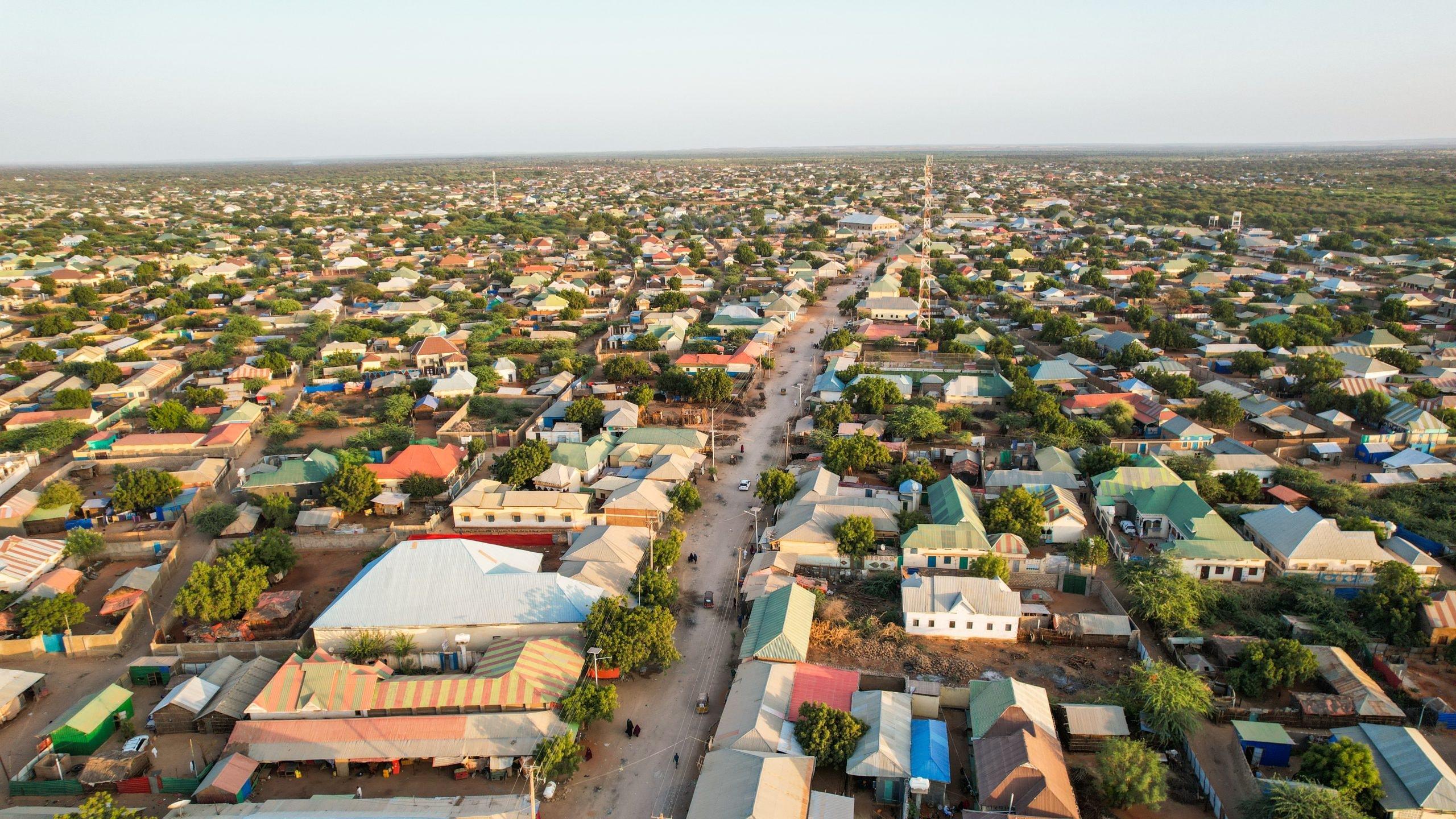
Even though Jowhar is the capital of Hirshabelle State, it’s not a very crowded city. One reason is that it’s quite close to Mogadishu. Many people especially those working for the regional government choose to live in Mogadishu instead, mainly because it’s easier and feels safer for them.
As I spent time in Jowhar, it became clear that farming is at the heart of the town. You could tell just by looking at what people eat the dishes were full of fresh produce from the land, and meat was only a small part of the meal. Cambuulo – beans with maize – is often eaten at night.
People in Jowhar are friendly and welcoming. Everyone is busy with his/her own business. The city’s population is also diverse. The district commissioner is from the Somali Bantu community, which is rare to see in many local administrations in Somalia.
Jowhar has been the capital city for Hirshabelle for nine years now, but its urban development remains negligible. Public infrastructure is poor, and there are no observable development efforts in town.
The legacy of the colonial Italian administration is still evident in Jowhar. I was able to visit some of the historic places in town. One of the beautiful places I visited is Xiintooy. The Italians wanted to generate electricity from Xiintooy. The construction of a dam inside the Shabelle river, less than a kilometer from the main bridge. The project was not successful, and no electricity was ever generated. People visit the place to swim and take photos. Thursdays and Fridays are the busiest days in Xiintooy. I saw photographers taking photos of swimmers. The place is beautiful. Water drops from a higher rock to two lower stairs in the middle of the river. Large green trees loom in the background. It is an enjoyable place. I deployed the drone to capture aerial imagery and video footage of the area. Due to the seasonal rains and the presence of tall vegetation, the drone lost signal mid-flight. While still airborne, it experienced a power failure as the battery was depleted. Fortunately, I was able to recover my drone without any damage.
Standing inside the old Isnaay sugar factory — once a symbol of Jowhar’s industrial glory.
Not far from Xiintooy lies a canal the locals call Scarico Di Fondo. It was built by the Italians back in 1923, just after World War I, to supply water to the sugarcane fields nearby. The base of the structure still stands today, though the canal hasn’t been repaired or used for many years.
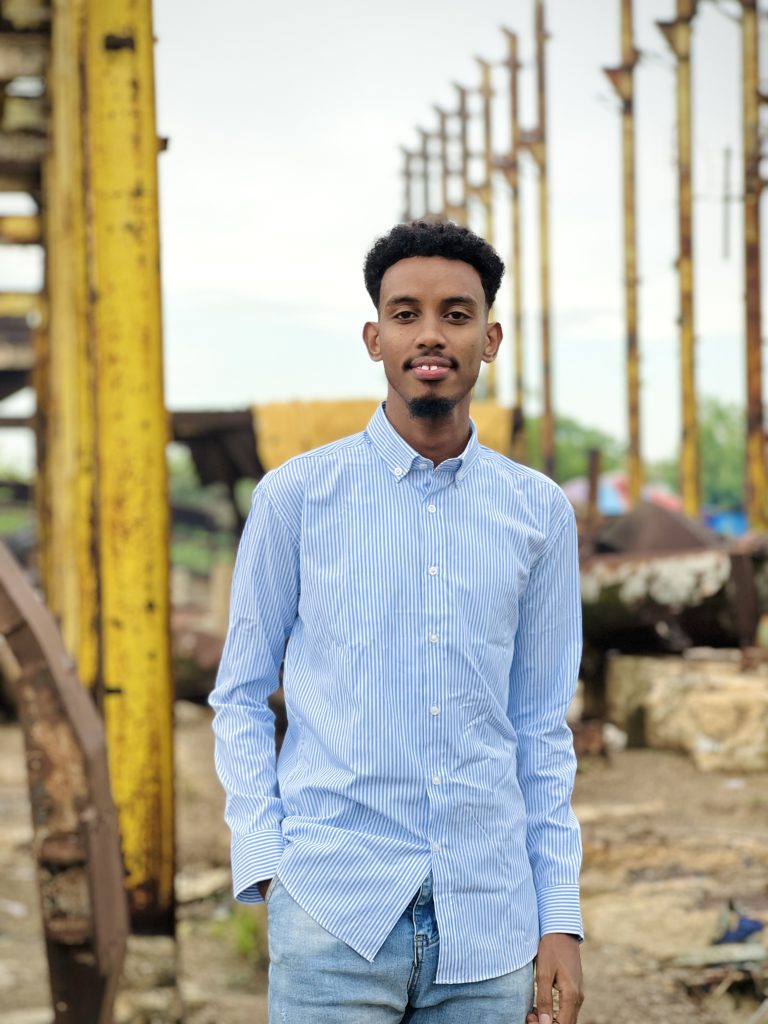
Close to that place is the Isnaay sugar factory. The yellow, rusty metal buildings of the factory and some tanks remain visible. Mohamed-Khadar, a local youth from Jowhar who accompanied me, pointed to the old factory and explained that many Italians used to work there and lived in the town during that time. Near the factory is a village with old buildings, which used to host the Italians who worked at the sugar factors. A century later, the Jowhar of today is not the place the workers of the sugar factory would have imagined it to be. Today’s Jowhar is worse off. It does not produce sugar, and its people are unemployed.
Yet, Jowhar is surrounded by fertile farmland. With peace, honest leadership, and investment, this land could feed not just the town, but hundreds of thousands of Somalis across the country. The story of Jowhar teaches us that Somalia has the natural resources to thrive. But without strong institutions and good governance, people continue to struggle.
I hope that one day we will see a Jowhar that is vibrant, thriving, and full of opportunity.
Over the past two years, I have had the privilege of visiting many towns across Somalia, yet I had never set foot in any of the towns in the Gedo region. That c...
After three months, I travelled back to the coastal city of Kismayo, the capital of the Lower Jubba region and the interim capital of Jubaland state. This was m...
I left Baidoa in August 2018, just after finishing high school, to study at a university in Mogadishu. For the last six years, Mogadishu has been my home, and d...